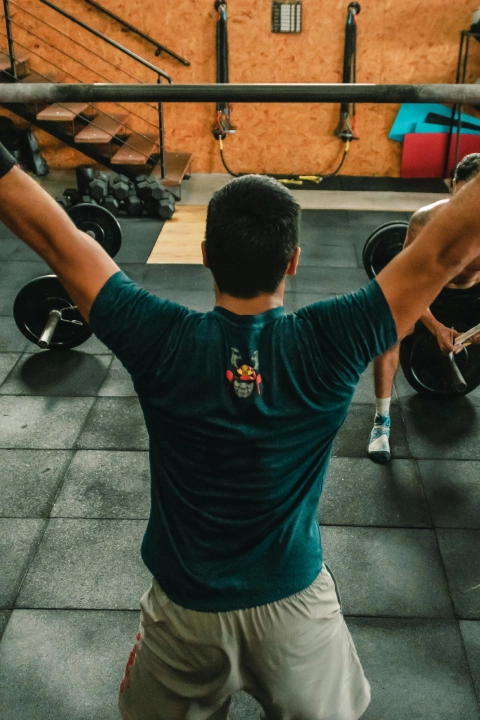
Sumo vs conventional deadlift in Blue Springs comes down to your hips, your torso length, and what you need the lift to build. Conventional pulls with feet about hip width and hands outside the knees, which puts more work on the hamstrings and lower back. Sumo pulls with a wide stance and hands inside the knees, which keeps the torso more upright and loads the hips and quads more. Neither one is cheating, and most people should learn both.
At CrossFit Cerberus the deadlift is one of the 5 main lifts we teach, along with the squat, shoulder press, bent over row, and bench press. This post covers how each stance works, how a coach picks one for you, and how our lifting process borrows from Westside Barbell to keep the deadlift moving without beating up your back.
Sumo vs conventional deadlift: the mechanical difference
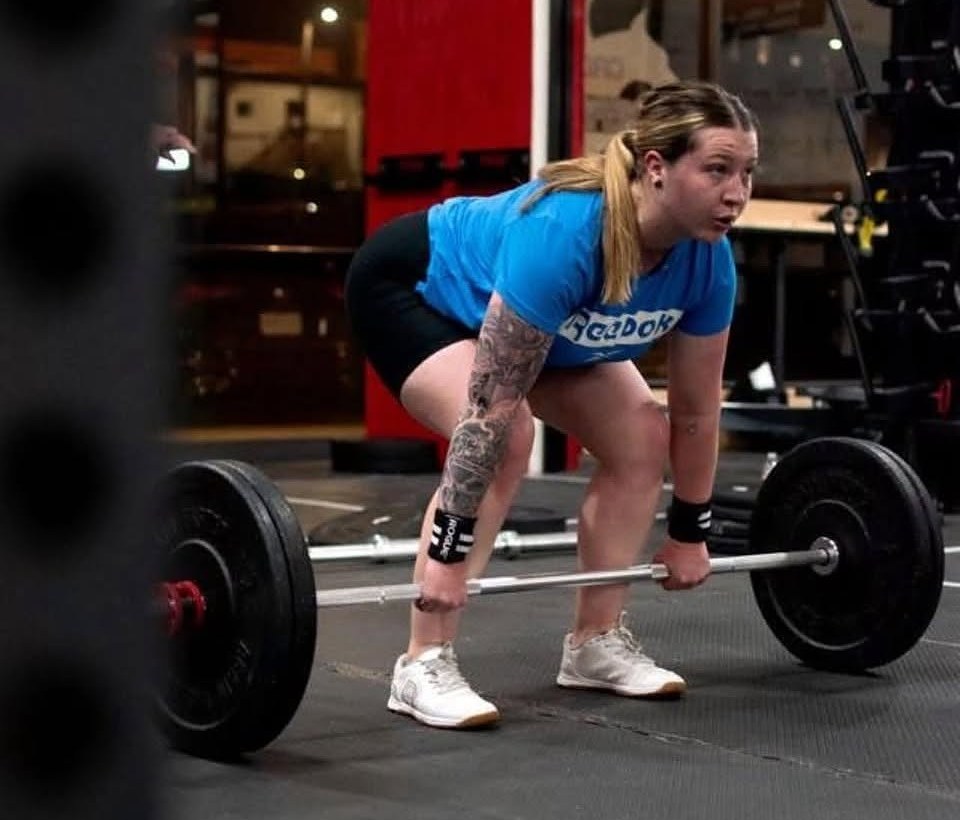
Conventional deadlift
- Setup: feet about hip width, toes slightly out, hands just outside the shins.
- Torso: more forward lean at the start, so the hips sit higher and further from the bar.
- Main movers: hamstrings, glutes, and the spinal erectors that hold the back flat.
- Bar path: longer, because the arms hang outside a narrow stance.
Sumo deadlift
- Setup: feet wide, toes turned out, shins close to vertical, hands inside the knees.
- Torso: more upright, so the hips start closer to the bar.
- Main movers: glutes, adductors (inner thigh), and quads, with less demand on the lower back.
- Bar path: shorter, because the wide stance lowers your hips toward the floor.
Shorter range does not make sumo easier for everyone. Sumo needs open hips and strong adductors. If your hips do not turn out, the knees cave and the bar drifts forward. Conventional needs hamstring length and a back that holds position. If the hamstrings are tight, the lower back rounds to reach the bar.
Which deadlift stance is better for beginners?
In my coaching since 1994, the answer has been decided by the lifter's body, not by a rule. Here is what the coach checks in the first sessions:
- Hip turnout: can you stand wide with toes out and push the knees over the toes without the arches collapsing?
- Hamstring length: can you hinge to a bar at mid shin with a flat back?
- Proportions: a long torso with short arms often sets up better sumo. Long arms often set up better conventional.
- History: a lifter whose lower back gets cranky from bending forward often tolerates the more upright sumo position better. A lifter with groin or hip complaints often does better conventional.
Most beginners at Cerberus start with a kettlebell deadlift from a box or blocks. The bell sits between the feet, so the lifter learns the hip hinge without fighting a barbell. From there we move to a barbell pulled from blocks at mid shin, then to the floor. That progression is what "perfect the basics" means in practice: the position has to be right at a light load before the load climbs.
How the Cerberus deadlift process is inspired by Westside Barbell
Westside Barbell in Columbus, Ohio, founded by Louie Simmons, built the conjugate method. Our lifting process is inspired by it. We have no affiliation with Westside; we use the ideas because they hold up mechanically.
Rotate the variation, not just the weight
Westside's own guide to types of deadlifts lists a weekly structure of max effort lower, max effort upper, dynamic effort lower, and dynamic effort upper days. It says sumo is the most common stance at Westside, that conventional is a strong way to target the hamstrings and glutes, and that athletes rotate deadlift variations: a max effort deadlift variation about once every three weeks, worked up to a top set of 1 to 3 reps, and sumo and conventional alternated each wave on dynamic effort days. It also covers block deadlifts and 2 to 4 inch deficit deadlifts.
The reason this works: the body adapts to one exercise quickly. Change the stance, the height, or the resistance, and the lifter keeps building strength while the technique stays fresh.
Accommodating resistance and special exercises
Westside's article Don't Deadlift explains that they improve the meet deadlift with squats, good mornings, and deadlifts pulled against bands, not just heavy straight weight off the floor. It also lists back extensions, abs, and lat work such as rows and chins as regular special exercises. Bands add tension as the bar rises, which matches the strength curve: you are weakest off the floor and strongest at lockout.
How we scale it for group classes and beginners
- Variation rotation: a class might pull conventional from blocks for three weeks, then sumo from the floor. Beginners stay on the block or kettlebell version until the position is consistent.
- Heavy days: experienced members build to a heavy single, double, or triple. Newer members stop at a weight that moves with the same speed and back position on every rep, usually sets of 3 to 5.
- Speed days: light loads, around half of a heavy lift, pulled for fast singles or doubles with short rest.
- Accessories: back extensions, kettlebell swings, Romanian deadlifts, and bent over rows build the hamstrings, glutes, and upper back that hold a deadlift together.
Why the deadlift matters for older adults
The deadlift is the movement of picking things up off the floor: groceries, a grandchild, a bag of mulch. Training it keeps that pattern strong.

The CDC guideline for adults 65 and older calls for at least 150 minutes a week of moderate aerobic activity, at least 2 days of muscle strengthening activities that work all major muscle groups, and activities that improve balance. The CDC notes that stronger muscles help people keep doing day to day activities without becoming dependent on others. A deadlift variation covers the hips, legs, back, and grip in one movement, which makes it an efficient part of those 2 strength days.
For adults over 60, we start with a kettlebell deadlift from a raised surface and progress the height and load slowly. The Strong and Steady 60+ program is built around this kind of progression. If you are new to lifting or have achy knees, back, or shoulders, the Start Here Workshop covers how to begin. If you have a back injury or a medical condition, get clearance from your doctor or physical therapist before you start deadlifting.
Why athletes need a deadlift strength foundation
Running, jumping, and changing direction all come from hip extension: driving the hips forward to push the ground away. The deadlift trains hip extension under heavy load. A stronger posterior chain (hamstrings, glutes, and back) gives an athlete more force to apply in each stride and jump, and a back that can hold position when hit or loaded.
- CrossFit athletes: deadlifts show up directly in workouts, and the pull from the floor is the first part of every clean and snatch.
- Kettlebell sport athletes: long cycle and snatch sets demand a strong hinge and grip for 10 minutes straight. Heavy deadlifts build the base strength that lets a lifter handle a heavier competition bell.
- Field and court athletes: sprinting and jumping rely on the same hip drive. Conventional pulls tend to load the hamstrings, which sprinters need. Sumo pulls train the adductors and hips used in lateral movement.
Common deadlift faults the coach checks
- Bar away from the shins: the bar should travel close to the legs. A bar that drifts forward pulls the back into a round position.
- Hips shooting up first: the chest and hips should rise together. Hips rising first turns the lift into a stiff leg pull.
- Knees caving in sumo: knees track over the toes. Caving usually means the stance is too wide or the adductors are weak.
- Jerking the bar: pull the slack out of the bar before it leaves the floor, then push the floor away.
For more on how we keep lifting safe in class, read Is CrossFit Safe? A Blue Springs Coach Answers.
Sumo vs conventional deadlift FAQ
Is sumo deadlift cheating?
No. Sumo is a legal stance in every major powerlifting federation, and Westside Barbell lists it as its most commonly used stance. The bar travels a shorter distance, but the wide stance demands more from the hips and adductors. Each stance trades one demand for another. Pick the one that fits your body, and train both for balanced strength.
Is sumo or conventional better for a bad back?
Sumo keeps the torso more upright, which reduces the forward lean that loads the lower back, so some lifters with back complaints tolerate it better. That is not a rule, and it is not treatment. If you have a back injury or ongoing pain, see a doctor or physical therapist first. A coach can then help you choose a stance and starting height that stays pain free.
Which deadlift builds more glutes?
Both train the glutes hard because both finish with full hip extension. Sumo starts with the hips closer to the bar and the knees turned out, which shifts more work to the glutes and adductors. Conventional shifts more work to the hamstrings and lower back. For overall lower body strength, rotating both stances over a training cycle covers more muscle than sticking with one.
Should beginners learn sumo or conventional first?
At Cerberus, beginners learn the hip hinge first with a kettlebell deadlift, then a barbell from blocks. The stance is chosen by what the coach sees: hip mobility, hamstring length, and body proportions. Many lifters learn conventional first because the setup is simpler, then add sumo as the hips open up. The goal is a flat back and controlled bar path in whichever stance you use.
How often should you deadlift?
Westside's guide describes a max effort deadlift variation about once every three weeks and lighter speed pulls once a week. Most general fitness lifters do well with one heavy deadlift day a week plus hinge accessories like swings and back extensions. Rotating variations lets you train the pattern often without repeating the same heavy stress every session.
How CrossFit Cerberus coaches the deadlift in Blue Springs
Every class at CrossFit Cerberus is coached and scaled. On deadlift days the coach sets your stance, your starting height, and your load, then watches each set for bar path, back position, and lockout. The variation rotates every few weeks, inspired by the Westside conjugate method, so you keep getting stronger without grinding the same lift into the ground. Members come to our gym at 200 NW 11th St from Blue Springs, Lee's Summit, Independence, Grain Valley, Oak Grove, and eastern Kansas City. You can see how classes run on our CrossFit classes page.
Book a free intro to learn your deadlift stance with a coach: https://www.crossfitcerberus.com/programs/get-started