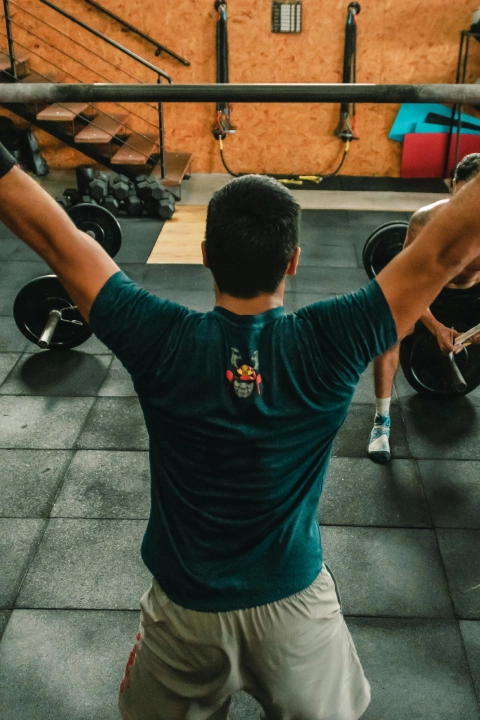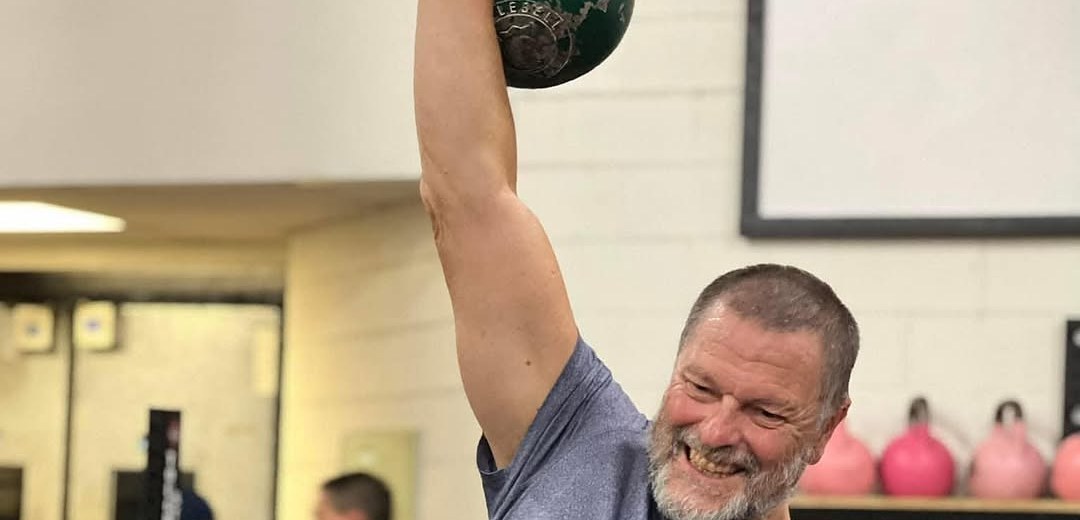
Long cycle vs jerk vs snatch comes down to what each lift asks of you. The jerk drives two bells (or one) from the chest to overhead with the legs, over and over. The long cycle adds a clean before every jerk, so the bell drops between the legs each rep. The snatch takes one bell from between the legs to overhead in a single swing. All three are scored in timed sets, most often 10 minutes, and we coach all three at CrossFit Cerberus in Blue Springs.
This post explains how each event works, what the judge counts, what each one trains, and how a new lifter picks a first event.
Long Cycle vs Jerk vs Snatch: The Three Kettlebell Sport Events
Kettlebell sport is a timed lifting sport. You lift for a set length of time and only clean, fixed reps count. Under the American Kettlebell Alliance rules, competition sets run 10 minutes, with a stop command at the 10 minute mark. Longer formats exist too: the IKMF runs 30 minute half marathon and 60 minute marathon events.
The bell is never set down during the set. Rest happens while holding it, in the rack or overhead, depending on the event. That rule is why the sport builds grip, breathing, and work capacity at the same time.
If you are new to the sport itself, start with our beginner's guide to kettlebell sport, then come back here to choose an event.
The Jerk: Chest to Overhead, Legs Do the Work
The jerk starts from the rack: bells on the chest, elbows against the body, legs straight. From there you dip, drive the bell up with the legs, drop under it with a second dip, and stand up to lock out.
What the judge checks
- Knees and elbows locked overhead, with the torso, head, and arm in line.
- A complete, visible stop at the top. IKMF rules call for a 1 second fixation.
- A clear second dip. IKMF rules do not count a push press or a landing with straight legs.
What it trains
The jerk is a leg event that looks like an arm event. Pressing the bell with the shoulders burns out the arms in two or three minutes. Driving it with the legs and catching it in a locked position lets a lifter keep going for 10. The rack is also where you rest, so a jerk lifter spends a large share of the set breathing under load with the bells on the chest. In Carl's coaching, the rack is the first thing that breaks down when a new lifter tires: elbows drift off the body and the shoulders take over.

The Long Cycle: Clean and Jerk on Every Rep
The IKMF defines the long cycle as two phases, the clean followed by the jerk, making one full rep. After lockout, the bell drops back to the rack, then swings down between the legs and is cleaned back up for the next rep.
What the judge checks
- The bell stops in the rack and the knees lock before the jerk starts. No bouncing straight into the dip.
- The same overhead fixation standard as the jerk.
- The bell passes back through the rack before each backswing.
What it trains
The long cycle adds a hinge to every rep. That means more hamstring, glute, and grip work, and more total distance the bell travels per rep. It is the event that most resembles a full body conditioning piece, because the legs, hips, back, shoulders, and grip all work on every rep. The trade off is speed: long cycle reps come slower than jerk reps, so pacing and breathing matter more than raw strength.
Long cycle is a common first event for new lifters who come from CrossFit or general kettlebell training, since the clean and the swing are already familiar movements.
The Snatch: One Swing to Lockout
In the snatch, one bell swings back between the legs and up to lockout in one smooth, uninterrupted motion. No pressing out at the top, and the bell must be caught on a straight arm. Under AKA rules, a lifter may change hands once during the 10 minute set, and the score is the total snatches divided by two. IKMF marathon formats allow more hand switches, and every switch must be made with a hand to hand swing.
What the judge checks
- A straight arm catch with a visible fixation overhead.
- No press out to finish the lockout.
- Rest only overhead. Under IKMF rules, resting in the rack in the snatch earns a warning, then a stop.
What it trains
The snatch is the grip and posterior chain event. The hand holds the bell through every backswing and every turnover, so grip endurance usually decides how long you last on the first hand. The hinge has to be sharp, because a slow hip lets the bell swing out in front and pull on the shoulder. Carl teaches the turnover at the top early, because a bell that flops over onto the forearm is the most common complaint from new snatch lifters.
Kettlebell Sport Events Compared
- Bells: jerk and long cycle can be done with one or two bells. Snatch uses one.
- Where you rest: jerk and long cycle in the rack or overhead. Snatch overhead only.
- Main limiter: jerk is usually limited by legs and breathing in the rack. Long cycle by grip and total work per rep. Snatch by grip and hinge timing.
- Hip work: the jerk has almost none. The long cycle and snatch hinge on every rep.
- Biathlon: some federations combine the jerk and the snatch into one competition total. IKMF does not use a biathlon format; its events are single discipline.
Competition bells come in fixed weights. The AKA list runs 8, 12, 16, 20, 24, 28, and 32 kg. A new lifter starts on a bell light enough to hold proper fixation for the full set, then moves up when the reps hold steady.
Which Event Should a Beginner Start With?
At Cerberus, a new lifter does not pick an event on day one. We teach the pieces first: the rack, the hinge and swing, and the overhead lockout. Those three positions are shared by all three events. Once those hold, the coach and lifter choose a first event based on what the body handles well.
- Strong legs, tight shoulders: often start with long cycle on one bell, since the clean gives a moment to reset each rep.
- Good overhead mobility and grip: the snatch is a fit.
- Solid rack and leg drive: the jerk rewards it.
A typical early progression uses short timed sets. For example, 3 to 5 sets of 2 minutes with a light bell, resting as long as the set took. As fixation stays clean, the sets get longer before the bell gets heavier. Many lifters train all three lifts and compete in whichever event fits them best. Adults starting later in life can read our post on kettlebell sport after 40 for how we adjust volume and recovery.
Frequently Asked Questions
What is the long cycle in kettlebell sport?
The long cycle is a clean and jerk done for time. Each rep starts with the bell swinging between the legs, then a clean to the rack, a pause with the knees locked, and a jerk to lockout overhead. The bell returns to the rack before the next backswing. It is done with one or two bells, usually in a 10 minute set.
Is the kettlebell snatch harder than the jerk?
They are hard in different ways. The snatch taxes grip and the hinge, because one hand holds the bell through every swing. The jerk taxes the legs and breathing, because you rest under load in the rack. Lifters with strong grip and good overhead mobility often find the snatch easier. Lifters with strong legs often prefer the jerk.
How long is a kettlebell sport set?
The classic competition set is 10 minutes. Under AKA rules, warnings start after 9 minutes and the judge calls stop at 10. The IKMF also runs 30 minute half marathon and 60 minute marathon formats. Training sets are often shorter, from 1 to 5 minutes, to build pace and technique before a full 10 minute set.
What is kettlebell biathlon?
Biathlon is a combined event: a jerk set and a snatch set, scored as one total. The jerk is done first, and lifters get a long rest before the snatch. Rest length and scoring differ by federation. IKMF does not run a biathlon format, so lifters in IKMF events compete in one discipline at a time.
Can a beginner do kettlebell sport?
Yes. A beginner starts with a light bell and short timed sets, learning the rack, the swing, and the overhead lockout before any 10 minute set. Competing is optional. Most people train kettlebell sport for conditioning, grip, and shoulder strength, and move to longer sets as their fixation stays clean under fatigue.
How CrossFit Cerberus Coaches Kettlebell Sport in Blue Springs
Carl Neidholdt has coached since 1994 and took bronze representing the US at the 2026 IKMF World Kettlebell Championships. The Cerberus kettlebell sport team includes multiple IKMF world champions and podium finishers. Every class is coached and scaled, and the culture is the same at every level: perfect the basics. That means rack, hinge, and lockout before speed, and clean reps before heavier bells.
Lifters come to our gym at 200 NW 11th St from Blue Springs, Lee's Summit, Independence, Grain Valley, Oak Grove, and eastern Kansas City. See the Kettlebell Sport program page for how the program runs, or read the official IKMF performance rules to see the standards in detail.
Book your free intro: https://www.crossfitcerberus.com/programs/get-started