
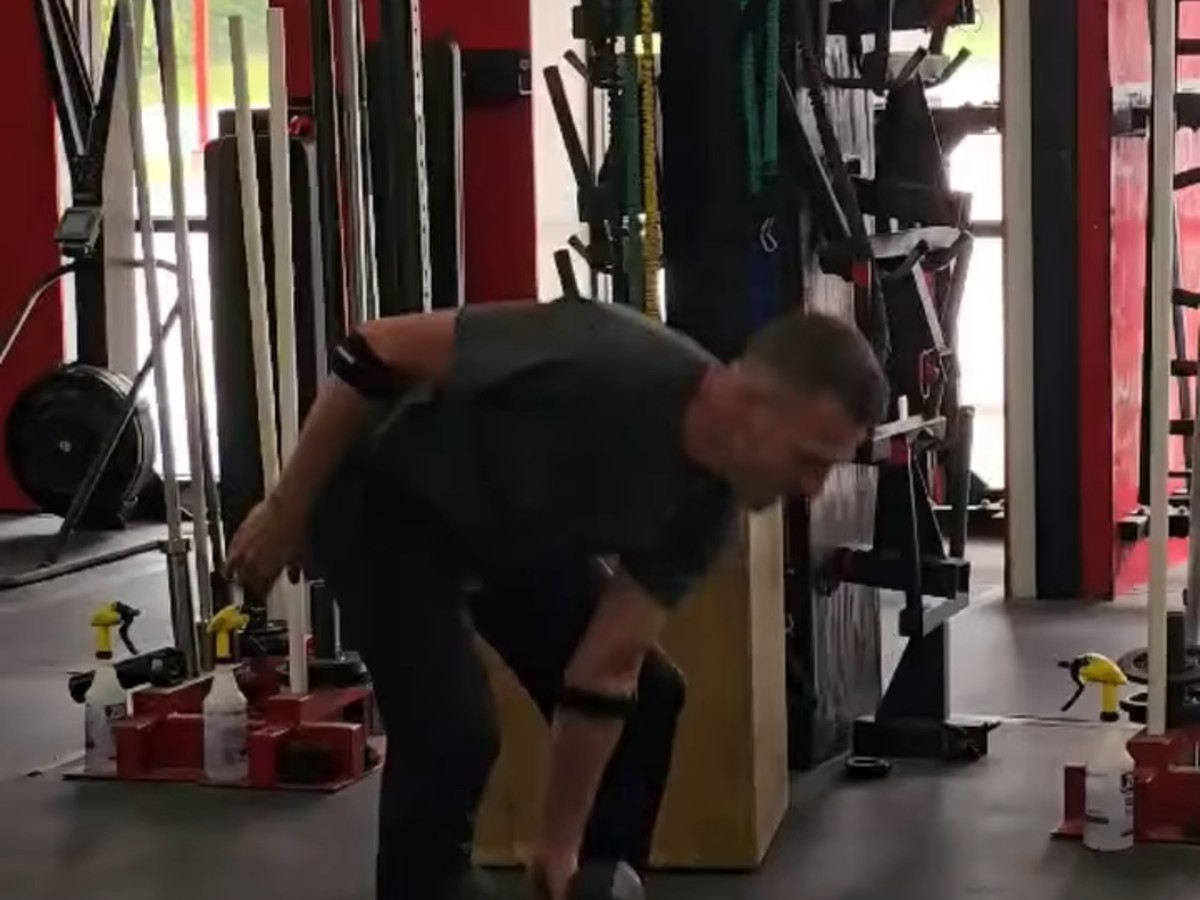
Back pain personal training in Blue Springs starts with one rule: get cleared first, then train what you tolerate and build from there. If a doctor or physical therapist has ruled out a serious problem, strength training with a coach is a reasonable way to keep moving and get stronger around the pain. The coach's job is to pick positions you can hold without a flare, set loads you can control, and change the plan as your back responds.
This post covers how CrossFit Cerberus coaches adults with back pain in personal training: who should see a doctor first, what the first sessions check, which exercises we use, and how load goes up week to week. It applies to clients from Blue Springs, Lee's Summit, Independence, Grain Valley, Oak Grove, and eastern Kansas City.
When to See a Doctor or Physical Therapist First
A trainer is not a diagnostician. Before training with back pain, a doctor or physical therapist should clear you when the pain is new, severe, or followed a fall or injury.
MedlinePlus, the National Library of Medicine's health site, says to call your health care provider if back pain is severe or does not improve after three days, and to get medical attention for back pain following an injury. It also notes that staying in bed for more than 1 or 2 days can make back pain worse. Source: MedlinePlus: Back Pain.
Get checked before any training session if you have:
- Pain after a fall, car accident, or other injury
- Pain that runs down one or both legs
- Numbness, tingling, or weakness in a leg or foot
- Pain that is getting worse instead of settling
- Pain with fever, or changes in bladder or bowel control
Once you have the green light, bring any notes or restrictions from your provider to the first session. We follow them.
Why Strength Training Fits Back Pain Personal Training in Blue Springs
Exercise is a standard part of back pain care. The American College of Physicians 2017 guideline on low back pain lists exercise among the first nonpharmacologic options for chronic low back pain (Qaseem et al., Annals of Internal Medicine). MedlinePlus states that regular, low impact exercise such as walking and swimming can help reduce and prevent back pain over the long run.
Strength training adds something walking alone does not: capacity in the muscles that carry load through your hips and trunk. Your back handles bending, lifting, and twisting every day. Stronger glutes, hamstrings, and trunk muscles share that work, and controlled practice of those movements under light load makes them familiar again.
From coaching since 1994, Carl's observation is that many adults with back pain stop bending and lifting entirely. The movements then feel more threatening when life demands them, like lifting a child or a bag of mulch. Training puts those movements back in the week in small, controlled doses.
What the First Sessions Check
The first two or three sessions are mostly assessment. Carl's background in corrective exercise and massage shapes what he looks at. The goal is to find what you can do today without increasing pain.
Positions and range
- How far you can hinge at the hips with a flat back before pain or rounding
- Squat depth to a box, and where the depth changes your symptoms
- Hip rotation and ankle range, since stiff hips and ankles push movement into the lower back
- Single leg balance for 20 to 30 seconds per side
Symptom response
We use a simple 0 to 10 pain scale. During a set, a small rise that settles within a minute or so is usually acceptable. Pain that climbs during the set, spreads, or is worse the next morning means that movement gets changed. You report the next day response at the start of every session, and that answer sets the plan.
For a full walkthrough of the first appointment, read Personal Training in Blue Springs: Your First Session.
Exercises a Coach Uses for Back Pain
The list below is a common starting menu. Not every client does every exercise. Each one has an easier and a harder version so the coach can match it to your tolerance.
Trunk control
- Dead bug: 2 to 3 sets of 6 to 8 slow reps per side, lower back stays in contact with the floor
- Side plank from the knees: 3 holds of 10 to 20 seconds per side, progressing to the feet
- Bird dog: 2 to 3 sets of 6 per side with a 3 second hold
- Suitcase carry: one kettlebell held at your side, 3 walks of 20 to 30 yards per side, torso stays tall
Hip hinge
- Glute bridge: 2 to 3 sets of 10 to 12
- Hip hinge with a dowel: the dowel touches head, upper back, and tailbone through the whole rep
- Kettlebell deadlift from blocks: starts with the bell raised so the range is short, then the blocks come down as the range is tolerated
Squat and legs
- Box squat: sit to a box at a height you tolerate, 3 sets of 8
- Goblet squat: light kettlebell or dumbbell held at the chest
- Split squat: holding a support at first for balance
Squatting is a daily task, from chairs to car seats. We covered why it matters in Why You Need to Squat (Even If You Think You Can't).
How Load Goes Up Week to Week
Progress in back pain training is slow on purpose. One variable changes at a time so that if the back reacts, we know why.
- Range first: the deadlift blocks come down or the squat box gets lower before weight is added
- Then reps: 3 sets of 8 become 3 sets of 10 at the same weight
- Then load: small jumps, one kettlebell or dumbbell size at a time
- Then complexity: two hand carries become one hand carries, supported split squats become free standing
If a session causes a flare, the next session drops back to the last version that felt fine. That is a planned step, not a failure. The trend over four to six weeks matters more than any one day.
Carl's coaching culture is "perfect the basics." For back pain clients, the basics are the hinge, the squat, the brace, and the carry. Intensity comes after those are clean.
One on One vs Group Training With Back Pain
One on one training makes sense at the start, when every rep needs to be watched and the plan changes session to session. The coach can stop a set the moment form breaks or symptoms change.
Small group training works once you know your modifications and can report your symptoms clearly. Many clients move into small group sessions or into scaled CrossFit classes once their basics are solid. Adults over 40 who want a guided start can also begin with the Start Here Workshop, and older adults have the Strong and Steady 60+ program.
Frequently Asked Questions
Can a personal trainer help with lower back pain?
A trainer does not diagnose or treat back pain. That is the job of a doctor or physical therapist. Once you are cleared, a trainer can build strength and control in the hips, trunk, and legs, pick positions you tolerate, and raise the load slowly. The trainer adjusts each session based on how your back responds.
Is it safe to lift weights with lower back pain?
For many adults it is, once a doctor or physical therapist has ruled out a serious cause. Start light, in positions that do not raise pain, and add weight in small steps. Pain that spreads down a leg, numbness, or weakness during or after training means stop and get checked before the next session.
What exercises should I avoid with lower back pain?
No exercise is banned for everyone. The test is your response. Movements that raise pain during the set or leave you worse the next morning get changed: less range, less load, a different angle, or a substitute. A deadlift from the floor might become a kettlebell deadlift from blocks until the full range is tolerated.
Should I see a physical therapist or a personal trainer for back pain?
Start with your doctor or a physical therapist when pain is new, severe, follows an injury, or comes with numbness or weakness. They find the cause and treat it. A personal trainer fits after that, or alongside it, to keep you training and build strength once you are cleared for exercise.
How long does it take for strength training to help back pain?
There is no set timeline, and nobody can promise one. In coaching, Carl tracks two things each week: whether daily tasks like getting out of the car or carrying groceries feel easier, and whether the working weights move up without a flare. Those trends tell you more than a calendar does.
How CrossFit Cerberus Coaches Back Pain Training in Blue Springs
CrossFit Cerberus has been open at 200 NW 11th St in Blue Springs since 2012. Owner and head coach Carl Neidholdt has coached since 1994, with a gymnastics background that includes coaching the USA Gymnastics World Age Group Team and judging the U.S. Olympic Trials, plus training in massage and corrective exercise. He holds CrossFit Level 2 and Precision Nutrition Level 2.
Personal training clients with back pain start with an assessment, follow any limits set by their doctor or physical therapist, and progress one variable at a time. Every session is coached and scaled to how your back responds that day.


